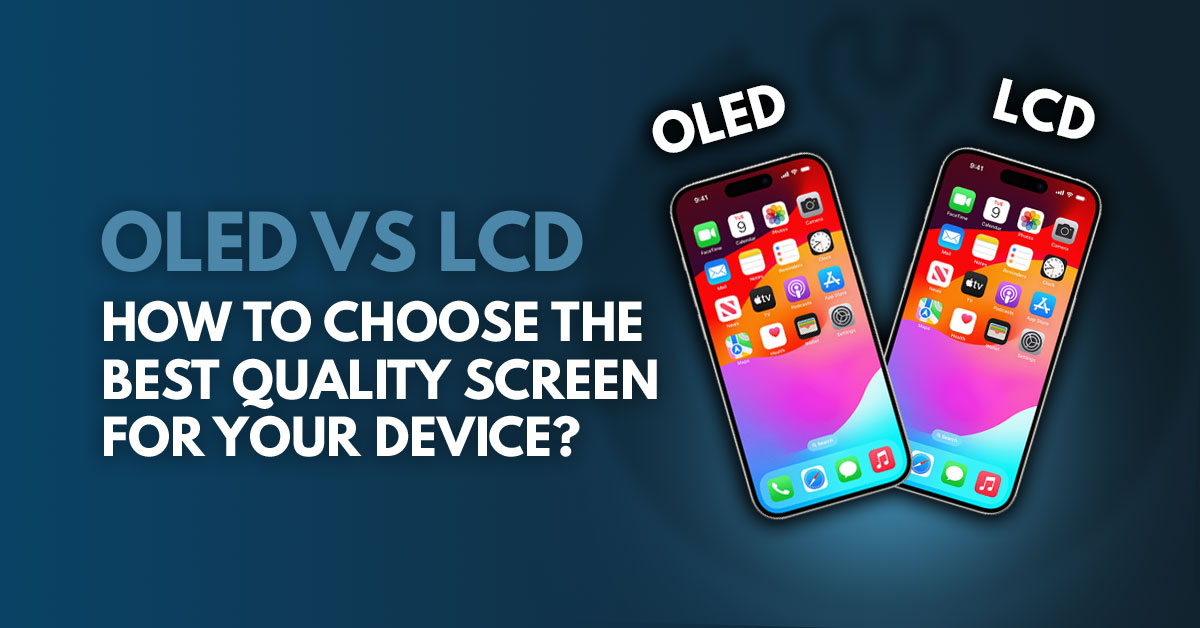
When considering whether to repair or replace a smartphone or tablet screen, choosing the right type of display is a crucial decision. The primary options are OLED (organic light-emitting diode) and LCD (liquid crystal display). Although both are common in smartphones, they have distinct characteristics that can influence the device’s performance and user experience.
OLED screens are generally considered superior for phones and tablets because they offer vibrant, true-to-life colors, higher contrast ratios, and better viewing angles. The key advantage of OLED is its ability to turn off individual pixels completely, resulting in perfect blacks and a wider dynamic range, which enhances picture quality significantly. OLED displays also tend to have faster response times, making them better for smooth motion and gaming, and they are more flexible, allowing for curved or foldable screens, which can improve durability and design. They typically boast longer lifespan in terms of color accuracy retention and resistance to light bleed, contributing to durability over time.
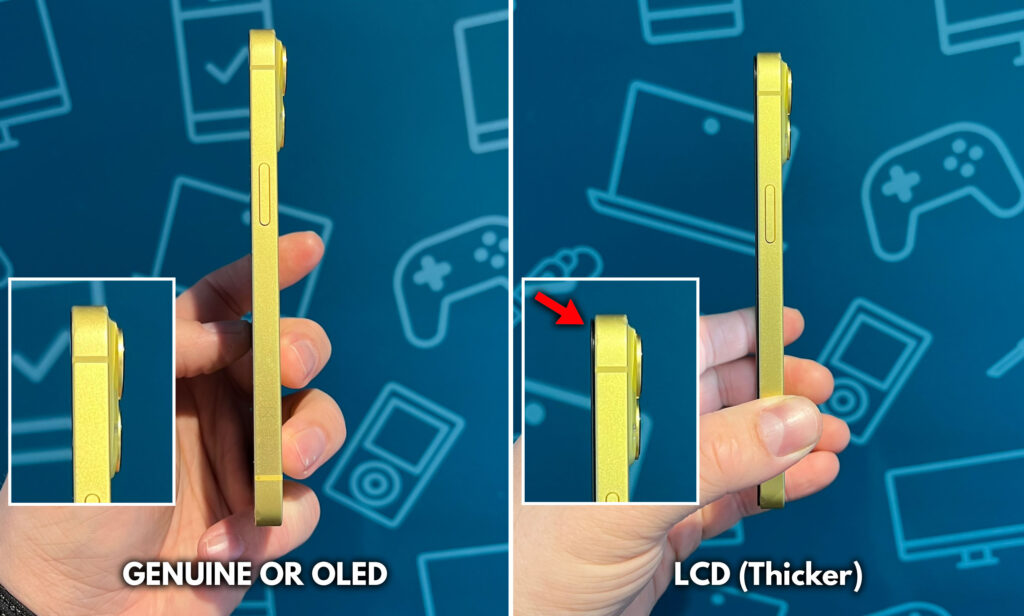
In contrast, LCD screens are more affordable and widely used in budget devices primarily because they involve simpler manufacturing processes and materials, leading to lower costs. LCDs use a backlight that illuminates pixels, which limits contrast ratios since blacks are not perfectly black but rather darker shades of gray, and colors can sometimes appear less vivid compared to OLED. They generally have good color accuracy and brightness, but their viewing angles are more limited, and color consistency can decrease when viewed from different angles. Additionally, LCDs tend to be thicker and less flexible, which makes them less suitable for innovative or curved designs but easier and cheaper to produce at scale.
Therefore, OLED is preferred for high-end devices because of its superior picture quality, contrast, and flexible design possibilities, while LCD remains a cost-effective choice for budget devices that prioritize affordability over the highest display performance.
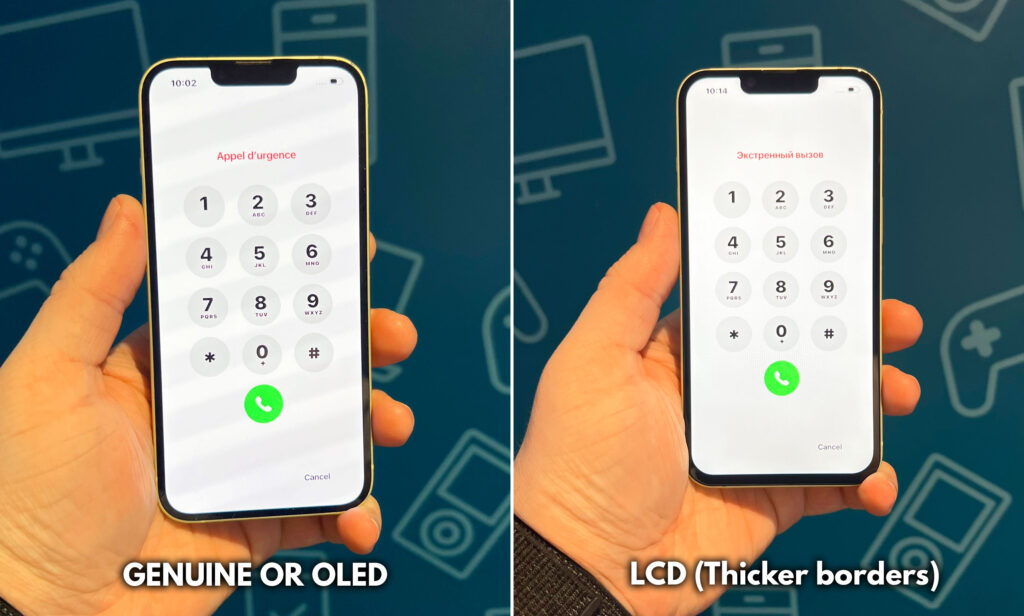
LCD screens tend to have thicker bezels compared to OLED screens because LCD technology requires additional space for backlighting and other components such as the liquid crystal layer and colour filters, which are usually positioned behind the display panel. OLED screens, on the other hand, emit light directly from organic diodes integrated into each pixel, allowing for thinner, more flexible, and more space-efficient designs. This inherent difference in technology results in LCD screens needing more room around the edges, leading to thicker bezels on budget devices that use LCDs.
When considering the pros and cons of OLED and LCD screen replacements, it can be helpful to compare the two side-by-side. Here is a table with five pros and cons to consider:
| Aspect | OLED | LCD |
|---|---|---|
| Pros: | 1. Superior contrast ratio with true blacks | 1. Generally more affordable |
| 2. Thinner and more flexible designs | 2. Longer lifespan with less burn-in risk | |
| 3. Superior picture quality and viewing angles | 3. Bright screens suitable for outdoor use | |
| 4. Faster response times | 4. Wide range of sizes and models | |
| 5. Richer color reproduction | 5. Easier to manufacture at scale | |
| Cons: | 1. Higher cost | 1. Limited contrast ratio |
| 2. More delicate | 2. Thicker panels and bezels/ borders effecting picture | |
| 3. Lower brightness | 3. Less vibrant blacks | |
| 4. Potential for colour inconsistency over time | 4. Narrower viewing angles | |
| 5. More delicate, prone to damage | 5. Slower response times |
At AJ I.T Services you will be offered more than one replacement option. That means deciding between an OEM or OEM-style OLED replacement or a more affordable LCD alternative. Both will get your phone back in working order, but the experience can feel a little different.
Choose OLED if:
Choose LCD if:
At AJ I.T Services, we offer genuine and high-quality screen replacements for iPhones and Samsung Galaxy devices, whether your phone originally used OLED or LCD. We can walk you through your options so you can pick the one that best fits your needs and your budget.
Can you put an LCD screen on a device that was designed for an OLED screen? Yes, but there are drawbacks/ issues you may come across. For example, replacing a phone's original OLED screen with an LCD can cause the device to run hotter and negatively impact battery life because OLED screens are more energy-efficient, especially when displaying dark themes, as they turn off pixels to create black. LCD screens, on the other hand, require a backlight to illuminate all pixels regardless of what is displayed, which leads to higher power consumption and increased heat generation, thereby reducing battery life and potentially causing the device to run hotter during use.
I noticed there are hard and soft OLED options, what's the difference? The main difference between hard and soft OLED screens lies in their flexibility and durability: hard OLED screens are rigid and less flexible, making them more prone to cracking or breaking upon impact, while soft OLED screens are flexible, allowing them to bend without damage, which can improve durability and enable curved or foldable designs.

